
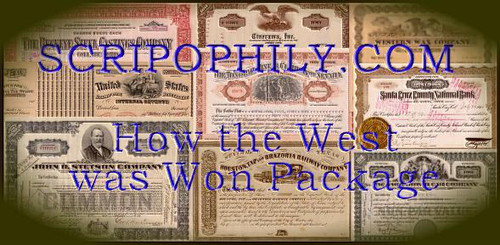
In celebrating the famous Cinerama Movie "How the West was Won" we are offering the following 9 Piece package of old stock certificates. You can check out our site for a complete description of each. The historic package includes the Cinerama Movie Company($7.95), Stetson Hat Company ($59.95), Western Wax Company ($9.95), Buckeye Steel Company ($19.95), Internal Revenue Tobacco Tax Certificate ($29.95), Goldfield Consolidated Mines signed by George Wingfield ($39.95), Santa Cruz County National Bank ($14.95), Tonapah Mining Company of Nevada ($19.95), and the Packard Car Company ($29.95). The total Scripophily value is $232.55 and we are discounting it to $139.95 for a savings of over $92! .
Cinerama Corporation Beautifully engraved Certificate from the Cinerama Corporation dated 1960's - 1970. This historic document was printed by the Security - Columbian Banknote Company and has an ornate border around it with a vignette of an eagle spreading its wings. This item has the printed signatures of the company's officers including William R. Forman as President and is over 30 years old. William Forman was a pioneer in the motion picture distribution business. He not only was a major contributor in Cinerama, he also was one of the founders in Robin International, Urban Drive-In Theatres and Pacific Theatres. Pacific Theatres is currently owned and managed by the Forman Family and includes the Gaslamp 15 in San Diego and the Cinerama Dome, a giant-screen geodesic dome and famous Hollywood landmark (under renovation) among other theatres. In addition, Pacific Theatres is a partner in a new Polish multiplex theater chain called Silver Screen, which currently operates one theater in Warsaw and has several more in development across Poland. It also owns and manages real estate through Pacific Theatres Realty. William Forman also produced, Krakatoa, East of Java.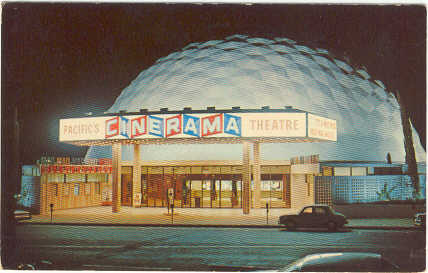 The first Cinerama theatrical releases were travelogue documentary adventures which became unparalleled box office hits even though they played in only a few exclusive road show locations. Their audience attendance rivaled and often surpassed those of the Hollywood films produced in that era. The first Cinerama production, This Is Cinerama played for only three months in one large Broadway theater and became the number one box office film hit of the entire year. Later, all but two of the Cinerama films that followed the first smash hit were listed within the top ten box office blockbusters of their year. Hollywood studios were taken aback by Cinerama's early successes and set their technical teams to develop wide screen systems of their own. Thus began an era of wide screen processes such as CinemaScope, VistaVision, Technirama, Superscope, which all were eventually dominated by Panavision. At the peak of the format's popularity there were over 230 theaters around the globe showing ten performances a week. In 1961 the first Cinerama productions to tell a story were produced by Cinerama, Inc. and Metro-Goldwyn-Mayer. They were The Wonderful World of the Brothers Grimm and How the West Was Won, the latter becoming the number one box office champ of 1962. However, due to the expense of conventional Hollywood production in the process, as well as the technical restrictions imposed on the filmmakers, the bottom line prevailed and How the West Was Won was the last true Cinerama feature. However, Cinerama lived on in a 70mm version at the exclusive Cinerama road show houses for over seven more years. The exhibition of classics like It's A Mad, Mad, Mad, Mad World, Grand Prix, and 2001, A Space Odyssey caused the familiar Cinerama name and logo to survive into the 1970's. There is a new movie called The Cinerama Adventure. It is a feature length documentary chronicling the amazing history of the long lost three-camera, three-projector cinematic process which thrilled millions around the world in the 1950's and early 60's. It all began with a secret virtual reality aerial training device in 1942, that had a substantial impact on the Allies' war efforts. Unlike the 3-D fads of the early 1950s, Cinerama enjoyed a steady 14 year reign, ultimately playing in over 200 specially equipped theaters in most major cities around the globe. Wildly popular, these "Wonder Hunting" Cinerama productions were almost always listed within the top ten box office grossing films of the year, with two titles landing in first place. Check out The Cinerama Adventure website at by Clicking Here. Cinerama was devised by Fred Waller, special effects engineer and prodigious inventor. Waller was also responsible for, among other things, water skis, a 360-degree panoramic camera, a remote sensing maritime anemometer and the Waller Gunnery Trainer, which could be considered a forerunner of arcade games and the modern flight simulator.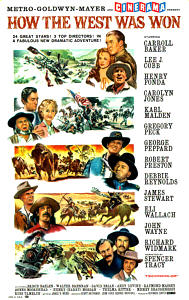
Stetson Hat Company Beautifully engraved issued Certificate from the famous John B. Stetson Company issued in 1935. This historic document has an ornate border around it with a vignette of the the company's founder John B. Stetson. Stetson History In 1865, with $100, John B. Stetson rented a small room, bought the tools he needed, bought $10 worth of fur and the John B. Stetson Hat Company was born. A year later the "Hat of the West" or the now famous "Boss of the Plains" hat was born and the name Stetson was on its way to becoming the mark of quality, durability, innovation and beauty. John B. Stetson experienced trying times in his life but after it all he relied on the one thing he did exceptionally well, making hats. He was trained by his father, a master hatter, and applied his skills and knowledge to a trade that, at the time was not held in high regard. A hatter was seen as unreliable, lazy, or aloof, only looking to make his money and go have fun. John B. Stetson changed all that and built one of America's most well-known and successful businesses. The longevity and history of the John B. Stetson Company is based on innovation and quality! John B. Stetson led the hat industry his entire career by designing new hat styles for fashion and function. When it came to quality it was his creed and for the past 130 years it has so stamped the product that the name and the word are synonymous. Today the Stetson hat factory in St. Joseph, Missouri is one of the largest in the country and produces a line of hats in hundreds of different styles and colors. In spite of this size, however, classic styling and premium quality remain as the driving forces behind each and every hat. As a result, Stetson hats are the most well known hats in the world. Wherever and whenever hats are discussed Stetson will be mentioned. Stetson is the standard in hats, the essence of the spirit of the West and an icon of everyday American lifestyle. Because of its authentic American heritage, Stetson remains as a part of history and, for the same reason will continue into the future. Stetson, it's not just a hat, it's the hat. The historical certificate is signed by the company's President and Treasurer and is over 64 years old.
Western Wax Company Beautifully engraved unissued Certificate from the famous Western Wax Company . This historic document has an ornate border around it with a vignette of an eagle with the capitol in the background. This item has some minor staining on top and is over 70 years old.
Buckeye Steel Castings Company Beautifully engraved Certificate from the famous Buckeye Steel Castings Company issued in 1929. This historic document was printed by the Edwards and Franklin Printing Company and has an ornate border around it.This item is hand signed by the company's president , J.C. Whitridge and is over 71 years old.
Internal Revenue Tobacco Certificate Beautiful engraved unissued Certificate from The Internal Revenue for Tobacco Tax. This certificate was a business license for being a Manufacturer of Tobacco. This item has an ornate border with a vignette of a woman sitting with an eagle in the background next to a barrel labeled tobacco. There is a box on top of the barrel that says cigars and a bottle of scotch on the ground. This is a very classy looking vignette. There are 12 spaces on the certificate so it could be punched to represent the month the tax was paid. This HISTORIC Tax certificate is over 115 years old and looks great framed. Republicans phased out unpopular war excise taxes throughout the late eighteen sixties and early seventies, except for sin taxes on alcohol, tobacco, and certain luxury items. Tobacco and alcohol excises were consistent money-makers, providing nearly 50% of the federal tax revenues by the 1890s. Each year had a different color certificate with the year printed on the face of the document. Also, the denomination for the tax was anywhere from $2 to $10. Given what is currently happening in the tobacco industry today, these certificates are highly desirable and collectible.
Goldfield Consolidated Mines signed by George Wingfield Beautifully engraved certificate from the Goldfield Consolidated Mines Company issued in 1946. This historic document has an ornate border around it. This item is hand signed by the Company's President ( George Wingfield ) and Secretary and is over 57 years old. A controversial figure in Nevada's Political and economic history. George Wingfield associated with state power Brokers and became one himself. He was active in Nevada Republican politics until his death in 1959, never holding public office; he refused an appointment to the U.S. Senate in 1912 and refused a draft for the governorship in 1926. Wingfield gained Wealth and power through gambling and mining ventures. During the depression, amid charges of corruption and manipulation, Wingfield's twelve banks failed, seriously impacting Nevada. He later made s second fortune from the Getchel Mine. A major player in union busting activities. Santa Cruz County National Bank of California Beautifully engraved Certificate from the famous Santa Cruz County National Bank issued in 1910 - 1924. This historic document has an ornate border around it with the company name in fancy print. It has a raised gold corporate seal. This item is hand signed (unusual signature) by the company's president and is over 76 years old.
The Tonapah Mining Company of Nevada Beautifully engraved Certificate from the famous The Tonapah Mining Company of Nevada issued in the 1950's. This historic document was printed by the Security Banknote Company and has an ornate border around it with a vignette of miners working inside of a shaft. This item is hand signed by the company's president and is over 44 years old. Massive doses of capital and labor again brought Nevada rapidly to its feet. During the 1900 census, Goldfield's (Esmeralda County) population was recorded at only 1,972 persons. Within five years, this isolated mining community had swelled to between 25,000 and 30,000 persons and was by far the largest city in Nevada. Nearly just as quickly, however, the Goldfield mining boom began its inevitable downward spiral, dropping the city's population to 9,369 persons recorded by 1910 and to only 2,410 person by the time of the 1920 census, 810 persons fewer than had been recorded in the 1880 population census for Esmeralda County. Thirty miles to the north of Goldfield, the town of Tonopah (in Nye County) also boomed from local gold discoveries, with its population exploding from only 1,140 persons in 1900 to 7,513 persons by 1910. In a burst of civic-mindedness, Wyatt Earp, having gained legendary notoriety for his Tombstone, Arizona, and OK Corral exploits, established a bar and tobacco store to share in the riches of the City of Tonopah, thus renouncing his somewhat checkered past. (Fortunately, the town fared better than Earp, who was arrested two years later in Los Angeles on fraud charges.) Nevada Historical Marker 101 Location: Central Region, Esmeralda County, Nevada. Located on U.S. Highway 95, thirteen miles north of Tonopah, Nevada. As a result of the mining excitement at Tonopah in 1901 and subsequent construction of the Tonopah and Goldfield Railroad, Miller's was founded in 1904 as a station and watering stop on that line. The name honors Charles R. Miller, a director of the railroad and former Governor of Delaware. He was also vice president of the Tonopah Mining Company and was instrumental in having their 100- stamp cyanide mill build here in 1906. In 1907 the town boomed with the construction of the T & G Railroad's repair shops and another large mill. Boasting a business district and post office, the population grew to 274 in 1910. By 1911, the railroad shops and a mill had been moved away, and Miller's began to decline. It was abandoned in 1947 when the railroad went out of business.
Packard Motor Car Company Historic Stock certificate of Packard Motor Car Company , the makers of the famous Classic Motor Car. This document has a Beautiful vignette of three allegorical figures. The Certificate has a nicely decorated ornate orange border and is really classy looking. This was issued for common shares and is dated 1947 through 1955. The item has normal cancellation markings and is approaching 51 years old. The Following was written by the Packard Motor Car Company in 1949 after their first 50 years Each share Capital Stock $10 par ex- changed for (5) shares Capital Stock no par in 1929 Merged into Studebaker-Packard Corp. in 1954 Each share Capital Stock no par exchanged for (0.2) share Common $10 par Studebaker-Packard Corp. name changed to Studebaker Corp. (Mich.) 6/29/62 which merged into Studebaker-Worthington, Inc. 11/27/67
Cinerama Corporation Beautifully engraved Certificate from the Cinerama Corporation dated 1960's - 1970. This historic document was printed by the Security - Columbian Banknote Company and has an ornate border around it with a vignette of an eagle spreading its wings. This item has the printed signatures of the company's officers including William R. Forman as President and is over 30 years old. William Forman was a pioneer in the motion picture distribution business. He not only was a major contributor in Cinerama, he also was one of the founders in Robin International, Urban Drive-In Theatres and Pacific Theatres. Pacific Theatres is currently owned and managed by the Forman Family and includes the Gaslamp 15 in San Diego and the Cinerama Dome, a giant-screen geodesic dome and famous Hollywood landmark (under renovation) among other theatres. In addition, Pacific Theatres is a partner in a new Polish multiplex theater chain called Silver Screen, which currently operates one theater in Warsaw and has several more in development across Poland. It also owns and manages real estate through Pacific Theatres Realty. William Forman also produced, Krakatoa, East of Java.
The first Cinerama theatrical releases were travelogue documentary adventures which became unparalleled box office hits even though they played in only a few exclusive road show locations. Their audience attendance rivaled and often surpassed those of the Hollywood films produced in that era. The first Cinerama production, This Is Cinerama played for only three months in one large Broadway theater and became the number one box office film hit of the entire year. Later, all but two of the Cinerama films that followed the first smash hit were listed within the top ten box office blockbusters of their year. Hollywood studios were taken aback by Cinerama's early successes and set their technical teams to develop wide screen systems of their own. Thus began an era of wide screen processes such as CinemaScope, VistaVision, Technirama, Superscope, which all were eventually dominated by Panavision. At the peak of the format's popularity there were over 230 theaters around the globe showing ten performances a week. In 1961 the first Cinerama productions to tell a story were produced by Cinerama, Inc. and Metro-Goldwyn-Mayer. They were The Wonderful World of the Brothers Grimm and How the West Was Won, the latter becoming the number one box office champ of 1962. However, due to the expense of conventional Hollywood production in the process, as well as the technical restrictions imposed on the filmmakers, the bottom line prevailed and How the West Was Won was the last true Cinerama feature. However, Cinerama lived on in a 70mm version at the exclusive Cinerama road show houses for over seven more years. The exhibition of classics like It's A Mad, Mad, Mad, Mad World, Grand Prix, and 2001, A Space Odyssey caused the familiar Cinerama name and logo to survive into the 1970's. There is a new movie called The Cinerama Adventure. It is a feature length documentary chronicling the amazing history of the long lost three-camera, three-projector cinematic process which thrilled millions around the world in the 1950's and early 60's. It all began with a secret virtual reality aerial training device in 1942, that had a substantial impact on the Allies' war efforts. Unlike the 3-D fads of the early 1950s, Cinerama enjoyed a steady 14 year reign, ultimately playing in over 200 specially equipped theaters in most major cities around the globe. Wildly popular, these "Wonder Hunting" Cinerama productions were almost always listed within the top ten box office grossing films of the year, with two titles landing in first place. Check out The Cinerama Adventure website at by Clicking Here. Cinerama was devised by Fred Waller, special effects engineer and prodigious inventor. Waller was also responsible for, among other things, water skis, a 360-degree panoramic camera, a remote sensing maritime anemometer and the Waller Gunnery Trainer, which could be considered a forerunner of arcade games and the modern flight simulator. Stetson Hat Company Beautifully engraved issued Certificate from the famous John B. Stetson Company issued in 1935. This historic document has an ornate border around it with a vignette of the the company's founder John B. Stetson. Stetson History In 1865, with $100, John B. Stetson rented a small room, bought the tools he needed, bought $10 worth of fur and the John B. Stetson Hat Company was born. A year later the "Hat of the West" or the now famous "Boss of the Plains" hat was born and the name Stetson was on its way to becoming the mark of quality, durability, innovation and beauty. John B. Stetson experienced trying times in his life but after it all he relied on the one thing he did exceptionally well, making hats. He was trained by his father, a master hatter, and applied his skills and knowledge to a trade that, at the time was not held in high regard. A hatter was seen as unreliable, lazy, or aloof, only looking to make his money and go have fun. John B. Stetson changed all that and built one of America's most well-known and successful businesses. The longevity and history of the John B. Stetson Company is based on innovation and quality! John B. Stetson led the hat industry his entire career by designing new hat styles for fashion and function. When it came to quality it was his creed and for the past 130 years it has so stamped the product that the name and the word are synonymous. Today the Stetson hat factory in St. Joseph, Missouri is one of the largest in the country and produces a line of hats in hundreds of different styles and colors. In spite of this size, however, classic styling and premium quality remain as the driving forces behind each and every hat. As a result, Stetson hats are the most well known hats in the world. Wherever and whenever hats are discussed Stetson will be mentioned. Stetson is the standard in hats, the essence of the spirit of the West and an icon of everyday American lifestyle. Because of its authentic American heritage, Stetson remains as a part of history and, for the same reason will continue into the future. Stetson, it's not just a hat, it's the hat. The historical certificate is signed by the company's President and Treasurer and is over 64 years old.
Western Wax Company Beautifully engraved unissued Certificate from the famous Western Wax Company . This historic document has an ornate border around it with a vignette of an eagle with the capitol in the background. This item has some minor staining on top and is over 70 years old.
Buckeye Steel Castings Company Beautifully engraved Certificate from the famous Buckeye Steel Castings Company issued in 1929. This historic document was printed by the Edwards and Franklin Printing Company and has an ornate border around it.This item is hand signed by the company's president , J.C. Whitridge and is over 71 years old.
Internal Revenue Tobacco Certificate Beautiful engraved unissued Certificate from The Internal Revenue for Tobacco Tax. This certificate was a business license for being a Manufacturer of Tobacco. This item has an ornate border with a vignette of a woman sitting with an eagle in the background next to a barrel labeled tobacco. There is a box on top of the barrel that says cigars and a bottle of scotch on the ground. This is a very classy looking vignette. There are 12 spaces on the certificate so it could be punched to represent the month the tax was paid. This HISTORIC Tax certificate is over 115 years old and looks great framed. Republicans phased out unpopular war excise taxes throughout the late eighteen sixties and early seventies, except for sin taxes on alcohol, tobacco, and certain luxury items. Tobacco and alcohol excises were consistent money-makers, providing nearly 50% of the federal tax revenues by the 1890s. Each year had a different color certificate with the year printed on the face of the document. Also, the denomination for the tax was anywhere from $2 to $10. Given what is currently happening in the tobacco industry today, these certificates are highly desirable and collectible.
Goldfield Consolidated Mines signed by George Wingfield Beautifully engraved certificate from the Goldfield Consolidated Mines Company issued in 1946. This historic document has an ornate border around it. This item is hand signed by the Company's President ( George Wingfield ) and Secretary and is over 57 years old. A controversial figure in Nevada's Political and economic history. George Wingfield associated with state power Brokers and became one himself. He was active in Nevada Republican politics until his death in 1959, never holding public office; he refused an appointment to the U.S. Senate in 1912 and refused a draft for the governorship in 1926. Wingfield gained Wealth and power through gambling and mining ventures. During the depression, amid charges of corruption and manipulation, Wingfield's twelve banks failed, seriously impacting Nevada. He later made s second fortune from the Getchel Mine. A major player in union busting activities. Santa Cruz County National Bank of California Beautifully engraved Certificate from the famous Santa Cruz County National Bank issued in 1910 - 1924. This historic document has an ornate border around it with the company name in fancy print. It has a raised gold corporate seal. This item is hand signed (unusual signature) by the company's president and is over 76 years old.
The Tonapah Mining Company of Nevada Beautifully engraved Certificate from the famous The Tonapah Mining Company of Nevada issued in the 1950's. This historic document was printed by the Security Banknote Company and has an ornate border around it with a vignette of miners working inside of a shaft. This item is hand signed by the company's president and is over 44 years old. Massive doses of capital and labor again brought Nevada rapidly to its feet. During the 1900 census, Goldfield's (Esmeralda County) population was recorded at only 1,972 persons. Within five years, this isolated mining community had swelled to between 25,000 and 30,000 persons and was by far the largest city in Nevada. Nearly just as quickly, however, the Goldfield mining boom began its inevitable downward spiral, dropping the city's population to 9,369 persons recorded by 1910 and to only 2,410 person by the time of the 1920 census, 810 persons fewer than had been recorded in the 1880 population census for Esmeralda County. Thirty miles to the north of Goldfield, the town of Tonopah (in Nye County) also boomed from local gold discoveries, with its population exploding from only 1,140 persons in 1900 to 7,513 persons by 1910. In a burst of civic-mindedness, Wyatt Earp, having gained legendary notoriety for his Tombstone, Arizona, and OK Corral exploits, established a bar and tobacco store to share in the riches of the City of Tonopah, thus renouncing his somewhat checkered past. (Fortunately, the town fared better than Earp, who was arrested two years later in Los Angeles on fraud charges.) Nevada Historical Marker 101 Location: Central Region, Esmeralda County, Nevada. Located on U.S. Highway 95, thirteen miles north of Tonopah, Nevada. As a result of the mining excitement at Tonopah in 1901 and subsequent construction of the Tonopah and Goldfield Railroad, Miller's was founded in 1904 as a station and watering stop on that line. The name honors Charles R. Miller, a director of the railroad and former Governor of Delaware. He was also vice president of the Tonopah Mining Company and was instrumental in having their 100- stamp cyanide mill build here in 1906. In 1907 the town boomed with the construction of the T & G Railroad's repair shops and another large mill. Boasting a business district and post office, the population grew to 274 in 1910. By 1911, the railroad shops and a mill had been moved away, and Miller's began to decline. It was abandoned in 1947 when the railroad went out of business.
Packard Motor Car Company Historic Stock certificate of Packard Motor Car Company , the makers of the famous Classic Motor Car. This document has a Beautiful vignette of three allegorical figures. The Certificate has a nicely decorated ornate orange border and is really classy looking. This was issued for common shares and is dated 1947 through 1955. The item has normal cancellation markings and is approaching 51 years old. The Following was written by the Packard Motor Car Company in 1949 after their first 50 years Each share Capital Stock $10 par ex- changed for (5) shares Capital Stock no par in 1929 Merged into Studebaker-Packard Corp. in 1954 Each share Capital Stock no par exchanged for (0.2) share Common $10 par Studebaker-Packard Corp. name changed to Studebaker Corp. (Mich.) 6/29/62 which merged into Studebaker-Worthington, Inc. 11/27/67